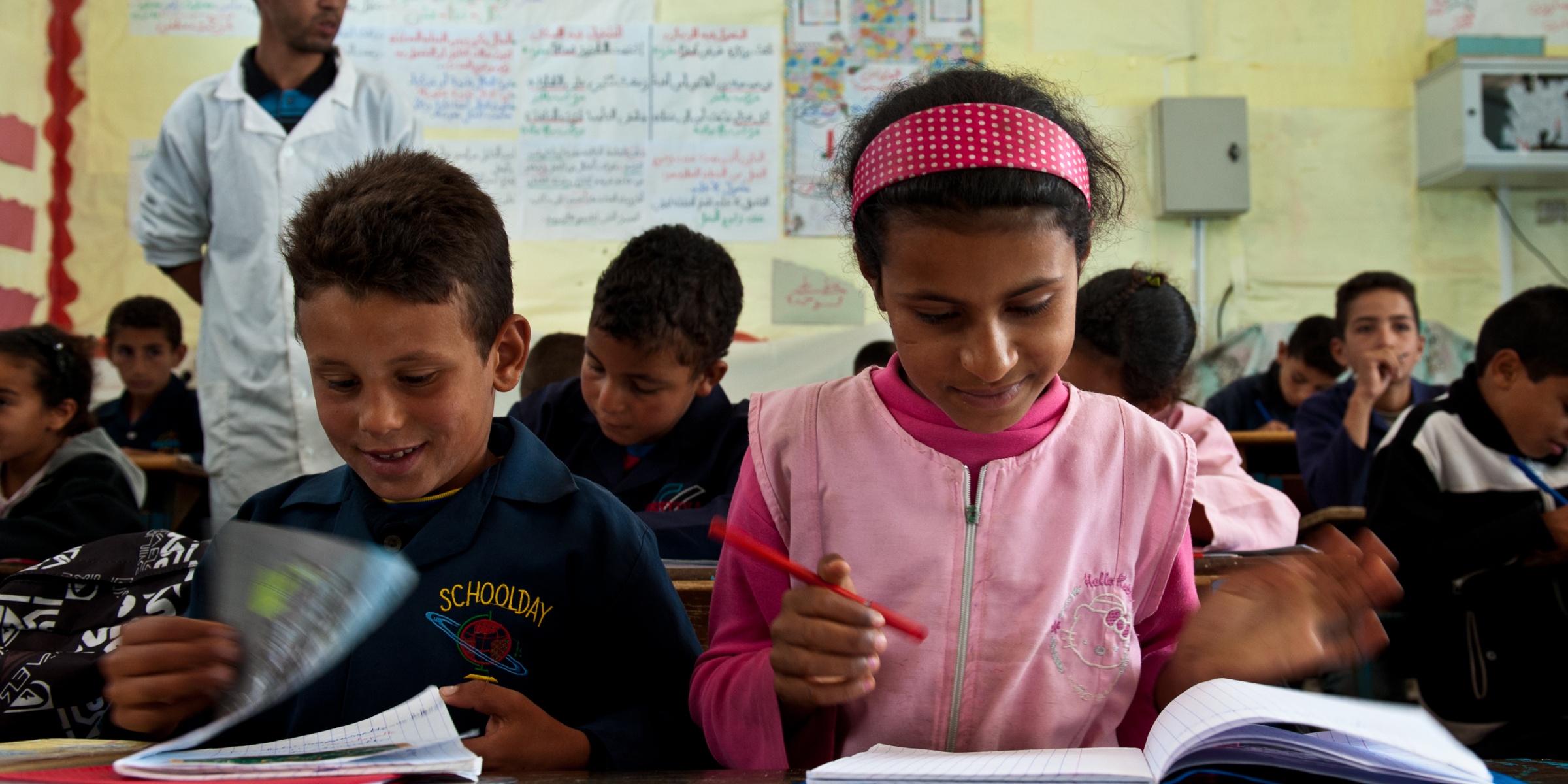
Education is among the priorities in Tunisia with strong investment from the national government.
The government is committed to transforming its education system through a systems approach, with a focus on adapting learning content and methods to ensure quality education for all children and youth, to ensure they are graduating with relevant 21st century skills to allow them to find jobs and become active citizens.
The vast majority of children ages 6-16 have access to school, and enrollment has steadily improved at the primary and secondary levels. The government is working to reduce dropouts and repetitions throughout the secondary level.
Building on education system improvements, current reform efforts aim to address issues of equity, quality, efficiency, performance and governance.
The country’s economic crisis and political instability have slowed down progress, and the COVID-19 pandemic has further exacerbated existing challenges, having a disproportionately negative impact on the most fragile students.
Declining education system performance has increased the gap between urban and rural areas, socio-economic groups, and public and private schools.
Tunisia’s Strategic Plan for the Education Sector 2016–2020 aimed to improve teacher training, upgrade curricula and infrastructure, and enhance the framework for private sector partnerships.
A new 8-year education sector plan (2023–2030), accompanied by a three-year budgeted action plan (2023–2025) aligned to the National Plan, are being developed by the Ministry of Education in close consultation with local education partners and on the basis of evidence and data that will be included in an upcoming education sector analysis.
A GPE system capacity grant has supported this process.