
By establishing strategic partnerships at the intersection of education and climate change, social protection, agriculture, health, disaster management or gender, GPE can help bridge the connections across ministries for joint solutions to interconnected challenges.
By tapping into extensive expertise within GPE’s networks, countries can access strategic technical assistance to address complex cross-sectoral barriers to the achievement of equitable quality education outcomes.
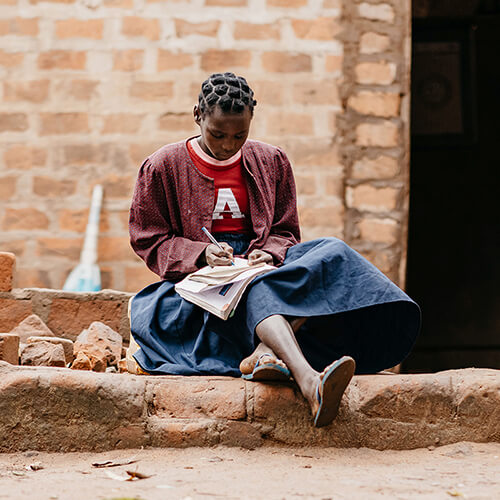
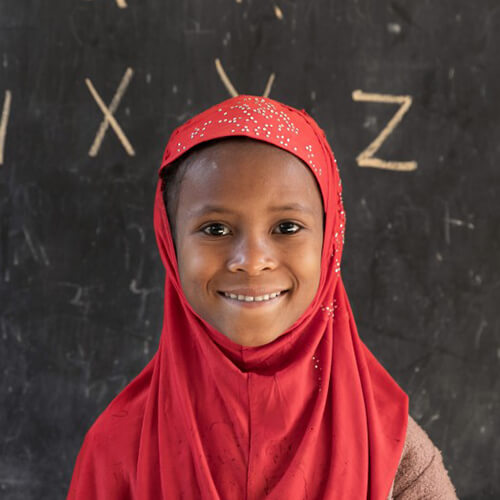
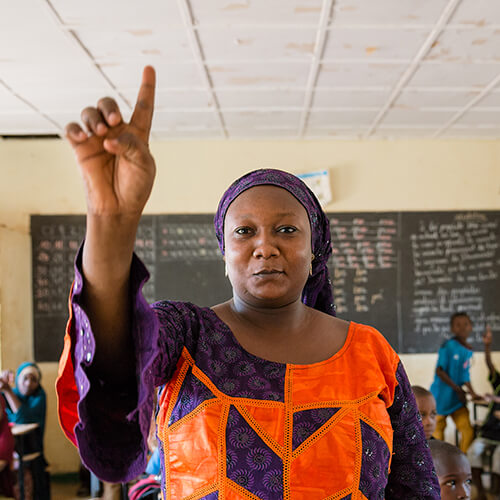
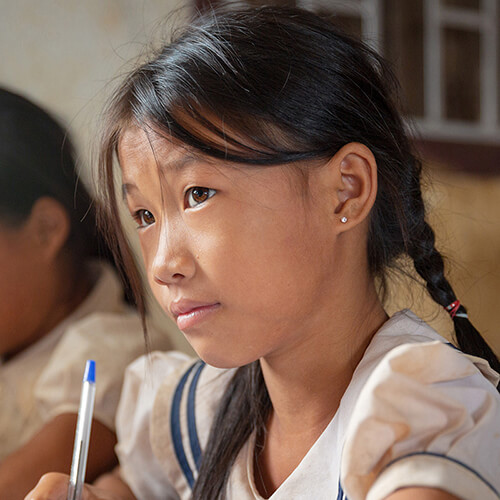
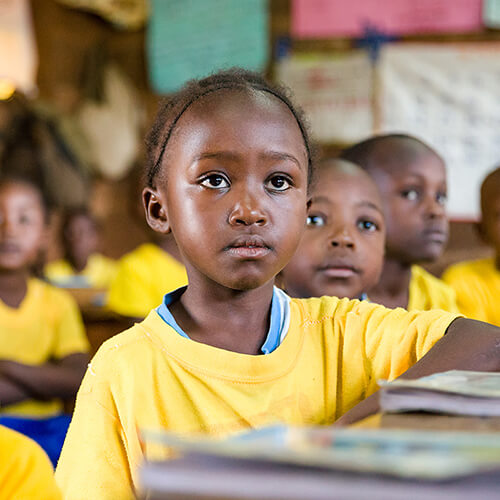
Child well-being is crucial to positive education outcomes
As the next generation comes of age, they face unprecedented setbacks in their quest for a good education.
Children's experience of gender discrimination, chronic hunger, violence in and around schools, climate risks, and the disadvantage of a growing digital divide pose unique challenges for education ministries.
Due to their complex nature with origins and solutions in multiple sectors, these challenges are not easily addressed by education ministries alone.
By working to secure win-win benefits across sectors, GPE takes a comprehensive approach to improve the conditions in which children can truly benefit from their education.
Learning and adapting to inform scaling
Technical assistance initiatives offer a novel way for GPE to mobilize partners and leverage their technical support for multiple countries facing common challenges.
As this portfolio grows, GPE is integrating strong monitoring, evaluation and learning activities to assess its impact and evolve the approach.
Pilot countries have been identified based on their potential to generate learning for the wider partnership, to ensure geographic diversity and test these initiatives in a range of contexts.
Initiatives also integrate support for cross-country learning, knowledge generation and global public goods to enable the whole partnership to benefit.
A mid-term review of the technical assistance portfolio is planned for 2026, to inform the future direction of these initiatives in the next strategic period.
Current initiatives
Since 2020, the GPE Board has committed US$37 million to support 5 initiatives: Climate-Smart Education Systems, Gender Equality, Safe Learning, School Health & Nutrition, and Technology for Education.
Climate Smart Education Systems Initiative
Partners: Save the Children and UNESCO and UNESCO-IIEP
Investment: US$21 million (including a contribution of US$5 million from Japan)
Objective: Enhance countries' capacities to mainstream climate change adaptation and environmental sustainability into education sector plans, budgets and strategies, as well as enhance education ministry capacity for cross-sectoral coordination on climate and environment-related policy and programming.
Gender Equality Initiative
Partners: Gender at the Center Initiative, UNGEI and UNESCO-IIEP
Investment: US$3 million
Objective: Reinforce country capacity to mainstream gender equality in and through the education system.
Pilot countries: The initiative is supporting efforts in Chad, Côte d’Ivoire, Jordan, and Pakistan (Balochistan).
Building on the Gender at the Center Initiative, this initiative aims to strengthen the capacity of education ministries and national education actors to develop and implement gender-responsive education sector policies, plans and budgets; and strengthening capacity of education ministries, local education groups, civil society and young activists to engage actively in inclusive dialogue on gender-transformative education.
The support available on demand to participating countries includes:
- Production and use of data and evidence for gender-responsive policy making
- Guidance on gender-transformative approaches in sectoral analysis, planning and budgeting
- Strengthening leadership skills to advance gender-transformative education
- Facilitating civil society and youth engagement in gender-responsive education dialogue.
Safe Learning Initiative
Partners: Safe to Learn Coalition and UNICEF
Investment: US$3 million
Objective: Build country capacity to prevent and respond to violence in and around schools.
Pilot countries: The initiative is supporting efforts in Honduras, Nepal, Sierra Leone and Sri Lanka.
The support available to participating countries includes:
- Technical capacity to ensure national policies and legislative frameworks embed violence prevention and response in education sector planning, budgeting, reporting and monitoring
- Advisory services to strengthen prevention and response at the school level
- Guidance on the use of social and behavior change approaches to address drivers of violence in schools and enable a supportive learning environment.
- Support to education ministries at the national and subnational levels to strengthen budgeting and costing, and development of results indicators for violence prevention and response
- Support country capacity to generate and learn from evidence on the prevalence and drivers of violence against children, and what works to address it.
School Nutrition Technical Assistance Facility
Partners: School Meals Coalition and World Food Programme
Investment: US$3 million
Objective: Reinforce national capacity to implement increasingly sustainable, gender-responsive and nationally owned school meal programs, providing schoolchildren with safe, diverse, nutritious foods that are locally purchased.
Pilot countries: The initiative is supporting efforts in Indonesia, Kenya, Lesotho, The Philippines, and Zambia.
This initiative aims to ensure that:
- Countries have increased sustainable financing to implement school meal policies and programs.
- Countries have improved (costed) policy and legal frameworks for national school meal programs.
- Countries have improved the implementation of locally grown and purchased food for school meal programs that enable multisectoral coordination, complementary activities and monitoring.
- Evidence and learning from other countries are increasingly used to strengthen and consolidate national school meal programs.
Technology for Education Initiative
Partner: EdTech Hub and UNICEF
Investment: US$7 million (including a contribution of US$4 million from Japan)
Objective: Strengthen the planning and programming capacity of education ministries to apply technology within education systems and improve access and learning for children. This targeted and contextualized technical assistance will catalyze and accelerate government priorities as expressed in policy documents and partnership compacts.
Pilot countries: The initiative is supporting efforts in El Salvador, Ghana, Guinea-Bissau, Lao PDR, Lesotho, Malawi, the Maldives, and Tajikistan.
More specifically, the initiative aims to ensure that education ministries benefit from the following support:
- Strengthen capacity to identify and leverage technology to improve access, inclusion and learning outcomes
- Strengthen capacity to leverage technology to improve the education systems' effectiveness – policies, data, planning, management, and monitoring
- Support education ministries to lead and coordinate cross-sectoral Tech4Ed strategies, including policies, programs, costed workplans, and resource mobilization
- Mobilize evidence of what/how and why tech works for education; and equip education ministries to generate and use evidence on how to effectively leverage tech to strengthen education systems.