Empowering teachers in Cambodia through continuous professional development
December 09, 2025 by UNESCO Cambodia |
7 minutes read

With support from GPE and UNESCO, Cambodia has given teachers access to professional training opportunities to transform teaching and enrich learning.

A version of this story was published previously on UNESCO’s website.

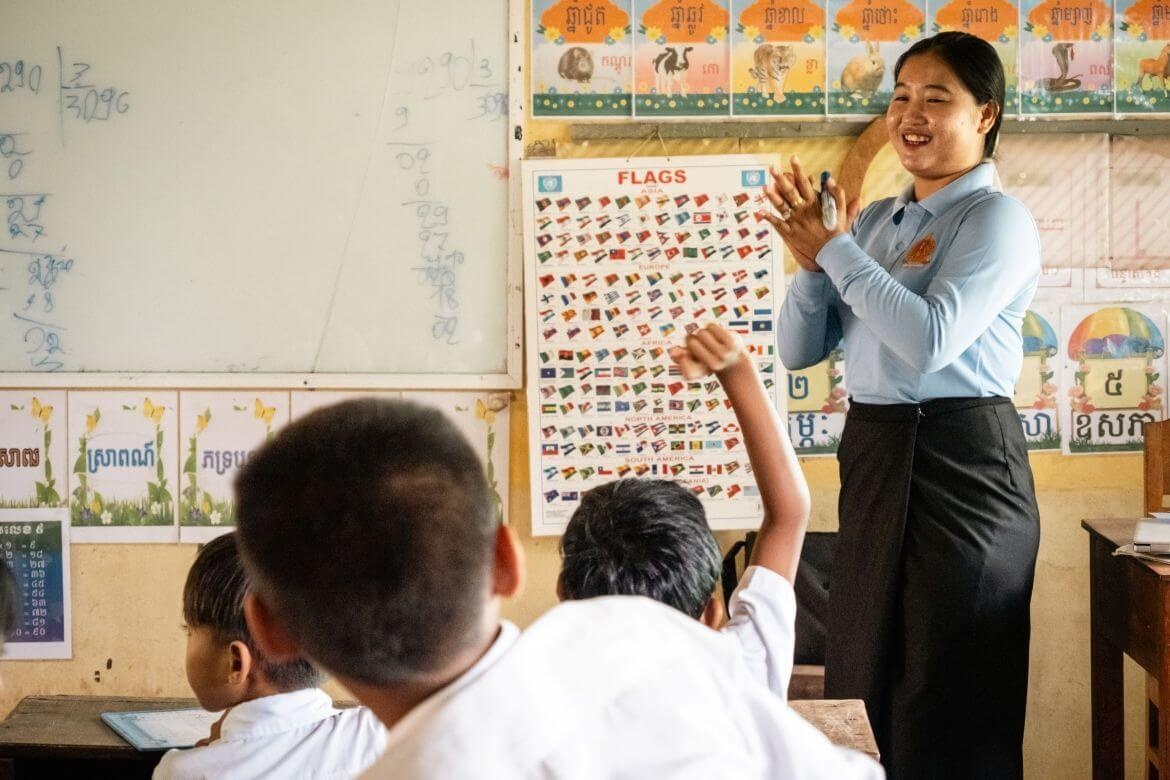
In Puok District, an hour from Siem Reap, grade 4 teacher Chhern Lisa begins her morning with a smile. Her classroom fills with the sound of chatter as she divides her students into groups.

Today’s science class is hands-on: students are building toy cars from recycled materials – including cardboard, bottle caps and toy wheels – they have brought from home. She asks her students to delegate tasks within their groups and work collaboratively.

Chhern Lisa

“I am happy to see my students enjoy learning. I apply the teaching techniques I learned to make my class more enjoyable.”

Chhern Lisa
Grade 4 teacher, Athipadei Primary School, Puok District

Lisa teaches Khmer, math, science and social studies at Athipadei Primary School. She is one of nearly 1,300 primary teachers participating in the Ministry of Education, Youth and Sport's rollout of the national continuous professional development (CPD) system.

With support from UNESCO through the Strengthening Teacher Education Programmes in Cambodia (STEPCam) and funding of over $27 million from GPE, the system was developed and piloted successfully in 100 schools in Siem Reap province under Phase I (2018–2022).

The national CPD system gives more teachers access to professional development opportunities aligned with their interests and needs.

Now in Phase II (2024–2028), nearly 50 accredited courses are available as the system expands nationwide, including five target provinces – Siem Reap, Kratie, Stung Treng, Oddar Meanchey and Preah Vihear – to ensure more teachers benefit from quality, continuous learning.

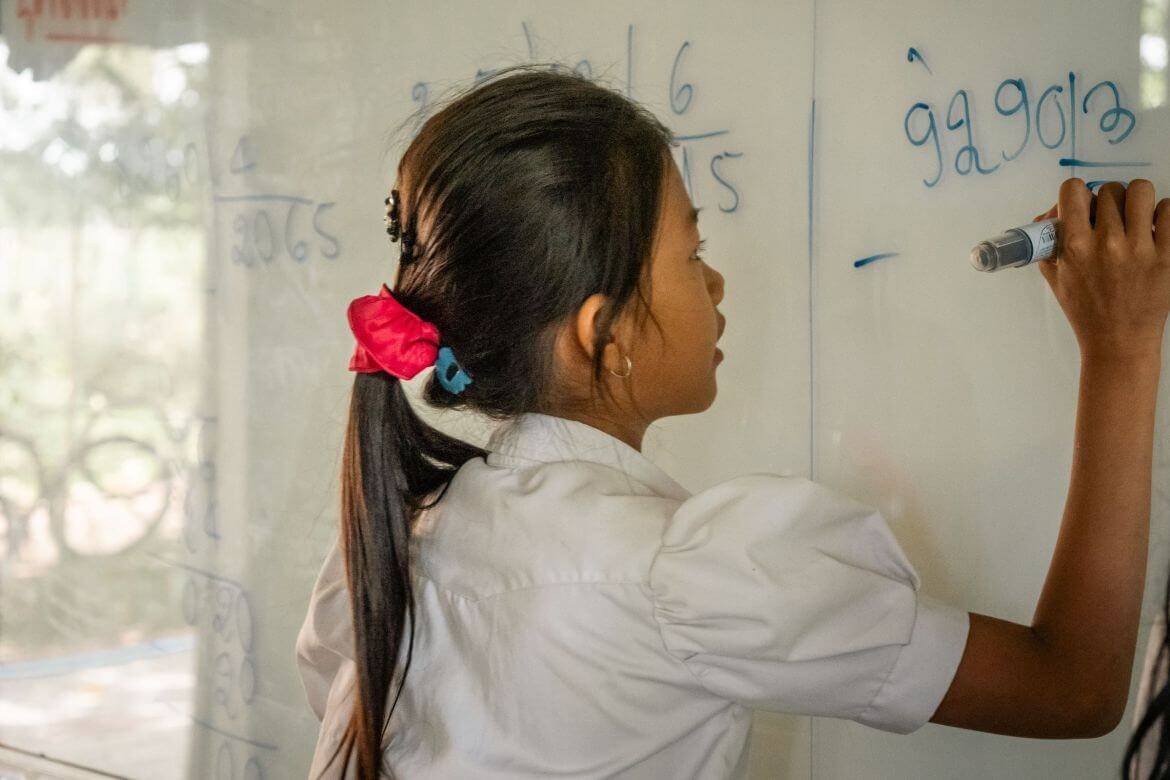
Son Sovanlida, grade 4 student, Athipadei Primary School, Puok District. Credit: UNESCO/Yuan Xu

Son Sovanlida, grade 4 student, solves a math problem in class at Athipadei Primary School, Puok District.

Credit:
UNESCO/Yuan Xu

Empowering teachers to unlock student potential

For Lisa, making learning fun and interactive has been a guiding principle throughout her 9 years of teaching.

She firmly believes in the lasting influence of teachers on students’ learning and growth within and beyond the classroom. “Teachers do more than pass on knowledge and skills – they also shape the minds and characters of their students,” she says.

Son Sovanlida

“I am excited when I get a chance to join small competitions in class and write my answers or solve equations.”

Son Sovanlida
Grade 4 student, Athipadei Primary School, Puok District
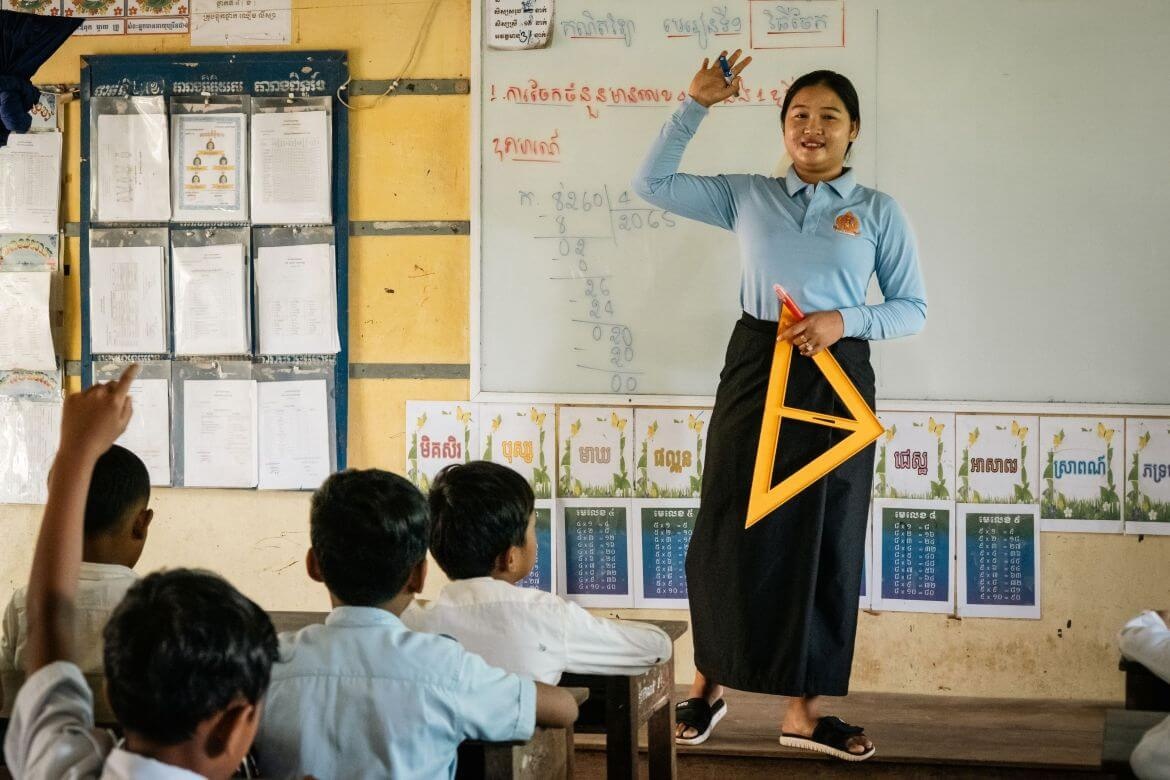
Chhern Lisa, grade 4 teacher, teaching a math class at Athipadei Primary School, Puok District. Credit: UNESCO/Yuan Xu

Chhern Lisa, grade 4 teacher, teaching a math class at Athipadei Primary School, Puok District.

Credit:
UNESCO/Yuan Xu

In the past, teachers in Cambodia had few opportunities for professional growth. Training programs were short-term, irregular and rarely recognized by the education ministry.

The new national CPD system, supported by STEPCam and GPE, has changed that, introducing a unified and accredited approach to teacher development.

When the system was piloted in Siem Reap in 2021–2022, Lisa was among the first to enroll.

Through the Methodology for Teaching Science for Upper Primary Grades course, she discovered hands-on activities such as the toy car lesson that now makes her classes more engaging and collaborative.

On completing the course, Lisa earned three official CPD credits, now recorded in her ministry staff profile.

Chhern Lisa

“I’ve learned and practiced new engagement techniques and teaching methodologies in class and improved my confidence in teaching.”

Chhern Lisa
Grade 4 teacher, Athipadei Primary School, Puok District

For teachers, the new system not only offers opportunities for professional development and lifelong learning, but the credits earned can contribute to career advancement.

Today, Lisa is continuing her learning journey through a course on ICT in education.

Transforming teacher training through technology

Expanding the national CPD system involves offering teachers a wider variety of meaningful, high-quality courses that meet their needs and interests.

Under Phase II, STEPCam is supporting the education ministry to broaden the supply of professional learning opportunities as well as support and selected teacher education institutions to develop blended CPD courses.

Based on a 2024 training needs assessment involving over 1,300 teachers, new accredited courses launched in 2025 now focus on classroom management, ICT skills, science teaching, and child development and learning.

To make learning more accessible, courses combine in-person sessions with online and self-directed components.


Sophorn Sopheak

“Teachers have the opportunity to combine face-to-face sessions with self-directed learning using technology. In the self-directed component, they apply what they have learned in their own classrooms, adapt it to their context and reflect on how to integrate it into their teaching practices and philosophy. This ensures learning goes beyond theory.”

Sophorn Sopheak
Vice Dean, Phnom Penh Teacher Education College
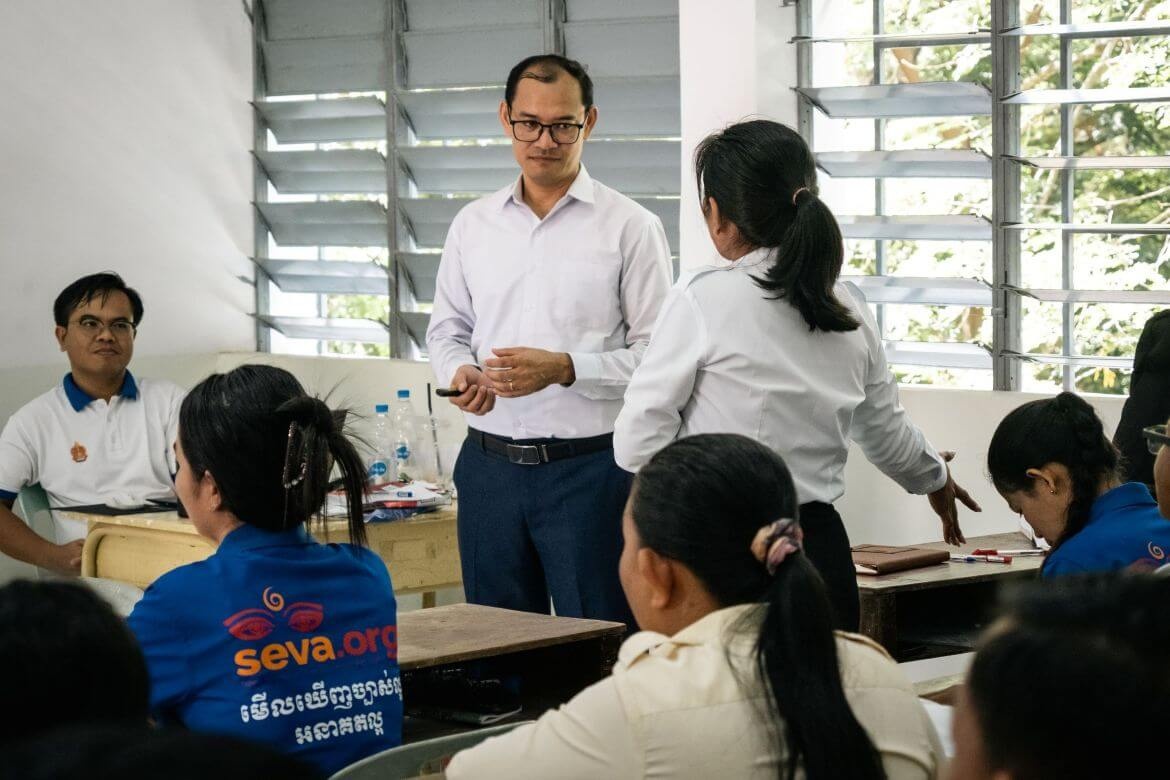
Sophorn Sopheak, Vice Dean, Phnom Penh Teacher Education College; course designer and trainer for teacher continuous professional development, in the training session of a continuous professional development course for teachers. Credit: UNESCO/Yuan Xu

Sophorn Sopheak, Vice Dean, Phnom Penh Teacher Education College; course designer and trainer for teacher continuous professional development, in the training session of a continuous professional development course for teachers.

Credit:
UNESCO/Yuan Xu

To keep the training content relevant and engaging, STEPCam supports course designers at teacher education institutions to meet regularly for joint reflection and content review.

Sopheak explains that materials are compared and analyzed to ensure they are suitable for primary school teachers, with activities and games adapted to their context.

Sophorn Sopheak

“Teachers do not just learn from the trainers – they learn from each other because they have time to express and exchange best practices.”

Sophorn Sopheak
Vice Dean, Phnom Penh Teacher Education College
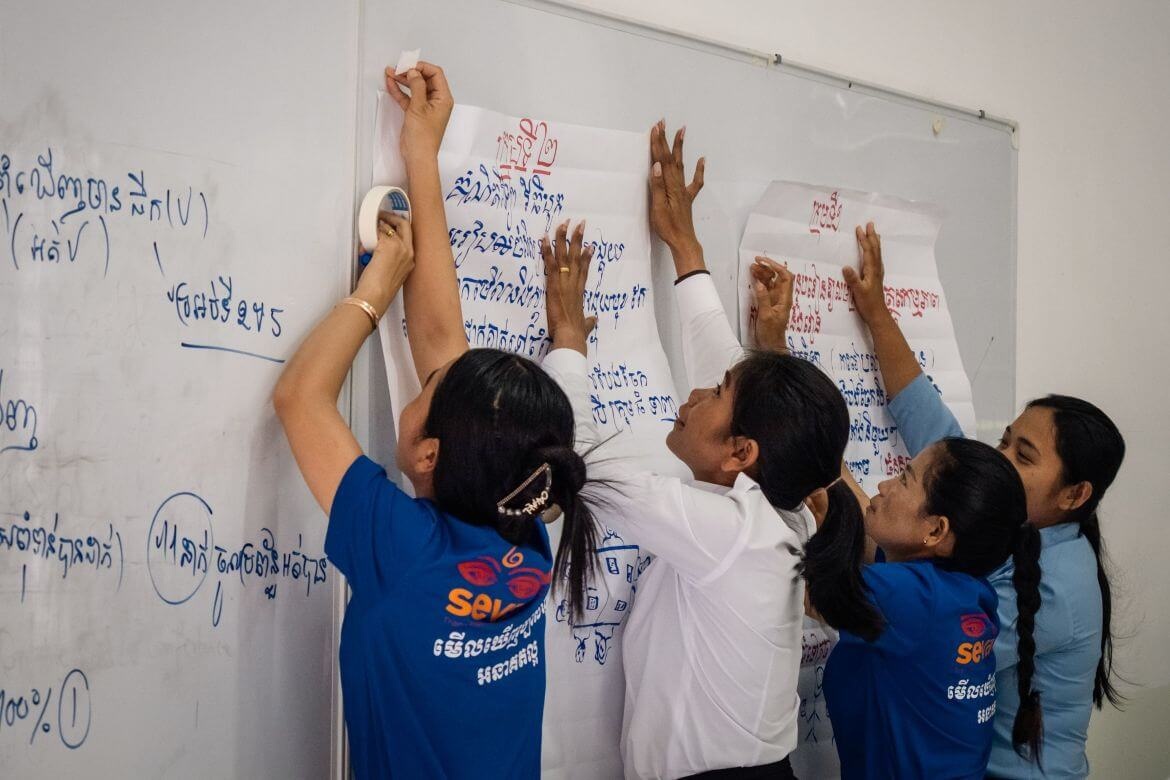
Teachers discuss and share their practices on classroom management during continuous professional development training. Credit: UNESCO/Yuan Xu

Teachers discuss and share their practices on classroom management during continuous professional development training.

Credit:
UNESCO/Yuan Xu

Nurturing lifelong learning: Schools as communities of practice

The collaboration teachers experience through their CPD continues long after the training ends.

Back in their schools, the teachers continue learning from one another, sharing strategies, exchanging ideas and supporting each other’s growth – building communities of practice that sustain continuous learning.

At Athipadei Primary School, Director You Phally recalls that when CPD was first introduced, teachers were hesitant and unsure of its purpose. Over time, there has been an evident change in thinking.

You Phally

“It takes time, but the teachers gradually understand the value of continuous professional development. What they learn transfers to students. When teachers learn more, the students learn more as well.”

You Phally
Director, Athipadei Primary School, Puok District

An evaluation of the STEPCam Phase I pilot found that over 70% of teachers recognize the need for CPD and believe that teachers should be lifelong learners.

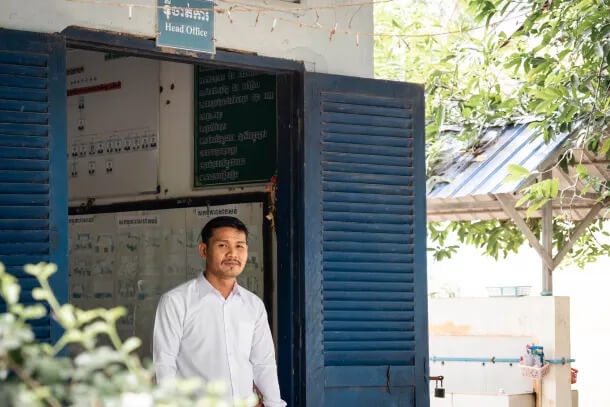
You Phally, Director of Athipadei Primary School, is a champion for continuous professional development for teachers at his school. Credit: UNESCO/Yuan Xu

You Phally, Director of Athipadei Primary School, is a champion for continuous professional development for teachers at his school.

Credit:
UNESCO/Yuan Xu

As a former teacher at Athipadei Primary School, Phally has witnessed the transformation in the school’s culture: “Now teachers are more student-centric, engaging students and making lessons interactive.”

He has also actively supported a collaborative learning environment among teachers.

Teachers who complete CPD courses now share their learning with their peers. “At first, I organized the sharing sessions,” he explains. “Later, teachers became more motivated and even reminded me to organize them.”

This shift extends beyond formal training. “Teachers are more student-centered and interactive,” Phally notes. “They have also become more curious about their professional development. Many are eager to upgrade their qualifications and continue further studies. I am happy to support them in this journey.”

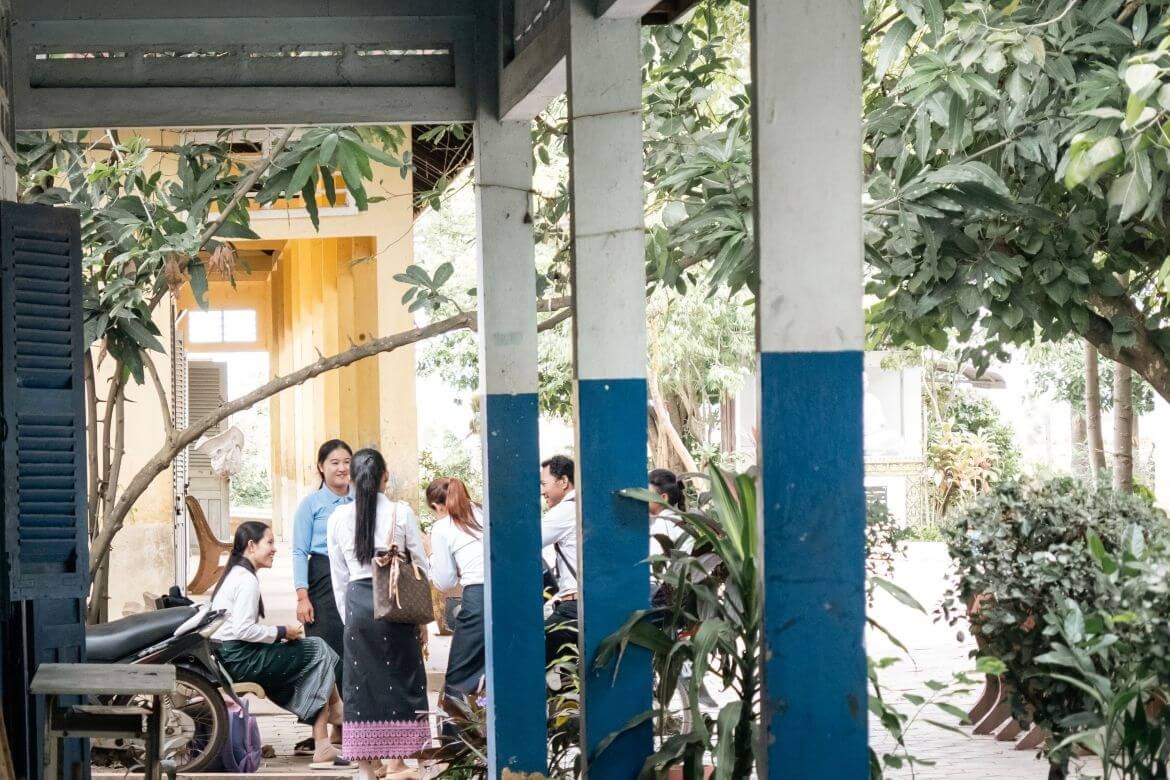
Chhern Lisa chatting with fellow teachers at Athipadei Primary School, Puok District. Credit: UNESCO/Yuan Xu

Chhern Lisa chatting with fellow teachers at Athipadei Primary School, Puok District.

Credit:
UNESCO/Yuan Xu

Building the future: Sustaining and institutionalizing CPD

Lifelong learning for teachers relies on strong, sustainable systems.

During STEPCam Phase I, the education ministry and UNESCO laid the foundation for a national CPD system by piloting courses and establishing a management office within the ministry, which was upgraded to a full technical department – the Development of Teachers Department – in 2024 following an organizational reform.

This milestone reflects Cambodia’s commitment to ensuring teachers can access high-quality, needs-based professional development throughout their careers.

“Investment in teacher professional development is essential to enhancing the professional competency and performance of educators to drive education excellence.”

H.E. Dr. Khuon Vicheheka
Director-General, Directorate General of Teacher Education and Development, Ministry of Education, Youth and Sport, Cambodia
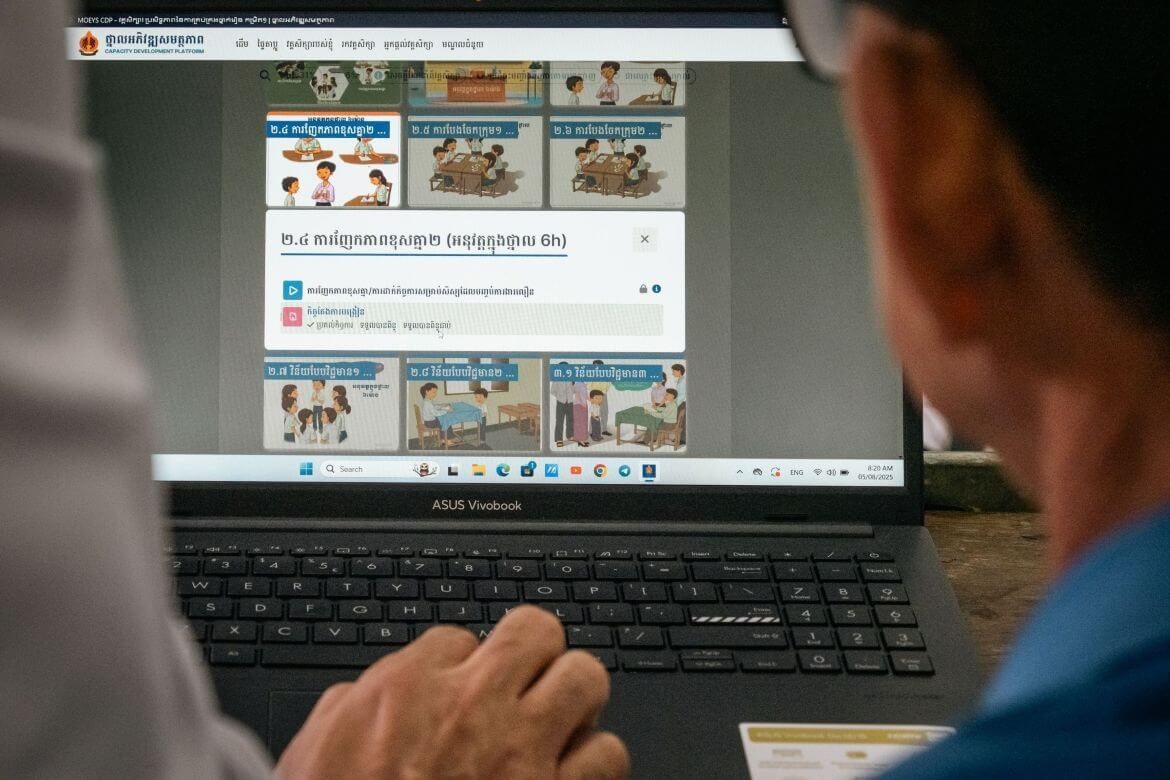
Teachers accessing blended CPD courses through an online learning platform. Credit: UNESCO/Yuan Xu

Teachers accessing blended CPD courses through an online learning platform.

Credit:
UNESCO/Yuan Xu

With more CPD providers engaged in the system through STEPCam support, teachers now have greater access to diverse, tailored training opportunities.

As of August 2025, 24,078 education professionals are recorded in the national CPD Management Information System, with 10,886 having accumulated between one and six CPD credits.

These achievements signify a major national effort to institutionalize CPD for teachers, reflecting strong collaboration among education stakeholders and a clear commitment to improving teacher growth and student learning across Cambodia.

Chhern Lisa, grade 4 teacher, teaching aclass at Athipadei Primary School, Puok District. Credit: UNESCO/Yuan Xu

Chhern Lisa, grade 4 teacher, teaching aclass at Athipadei Primary School, Puok District.

Credit:
UNESCO/Yuan Xu

Over the next two years, STEPCam will support a broader rollout of accredited courses while strengthening mechanisms that respond to teachers’ diverse learning needs.

This includes recognition of prior learning to formally acknowledge teachers’ previous training and experiences, as well as piloting self-directed CPD to provide more flexible, teacher-driven opportunities for professional growth.

The expansion of Cambodia’s CPD system represents an important step toward an inclusive, flexible and sustainable model that empowers every teacher to keep learning and innovating – transforming classrooms into spaces of growth and inspiration for all Cambodian students.

About STEPCam

STEPCam is one of the largest teacher education programs in Cambodia, with a total investment of $27.02 million by GPE.

Implemented by UNESCO in partnership with the Ministry of Education, Youth and Sport, STEPCam emphasizes comprehensive and robust capacity building and system strengthening.

The program invests in the development of a high-quality, professional and competent teaching workforce throughout their careers—from quality pre-service teacher education to ongoing professional development and career pathways advancement, training and mentoring support for classroom teachers, and systematic approaches to ICT in education to enhance teaching and learning quality.

Related blogs

Leave a comment

Your email address will not be published. All fields are required.

The content of this field is kept private and will not be shown publicly.

Comments

  • No HTML tags allowed.
  • Lines and paragraphs break automatically.
  • Web page addresses and email addresses turn into links automatically.