Planning for inclusive education in West Africa: Driving change through capacity building and partnerships

Eight West African countries are building more equitable and inclusive education systems for children with disabilities.

December 10, 2025 by Silvia Testa, IIEP-UNESCO Dakar
|
5 minutes read
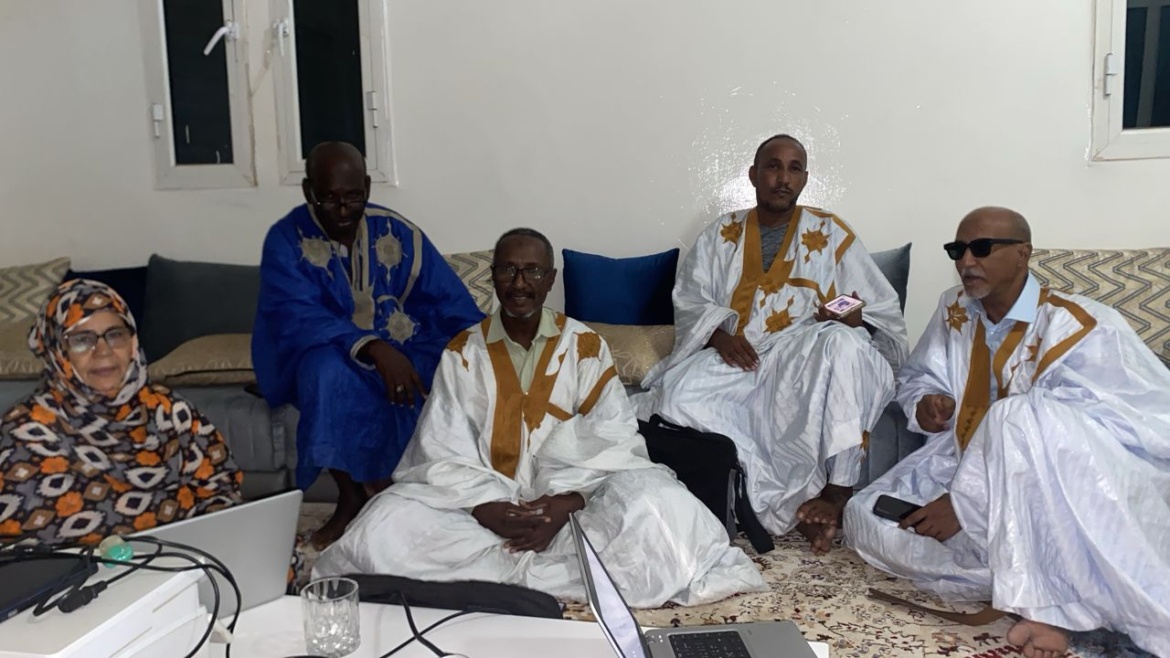
Participants in the first training session in Mauritania, October 2025. Credit: Mohamed Mahmoud KHIDDI, Point Focal Mauritanie pour le Programme « Planifier pour l’éducation inclusive » et Coordinateur Cohorte 1 pour la Mauritanie

Participants in the first training session in Mauritania, October 2025.

Credit: Mohamed Mahmoud Khiddi, Mauritania Focal Point for the ‘Planning for Inclusive Education’ Programme and Cohort 1 Coordinator for Mauritania

Children with disabilities are among the most excluded from education systems in West Africa: 38% of those with multiple disabilities are out of school compared to 27% of children without disabilities.

To help address this, the UNESCO International Institute for Educational Planning (IIEP) in Africa is implementing “Planning for Inclusive Education”—a regional program in West Africa funded by the Italian Agency for Development Cooperation (AICS).

This program supports 8 countries—Cabo Verde, The Gambia, Guinea, Guinea Bissau, Mali, Mauritania, Senegal and Sierra Leone—to make sure children and young people with disabilities are included in all education policy.

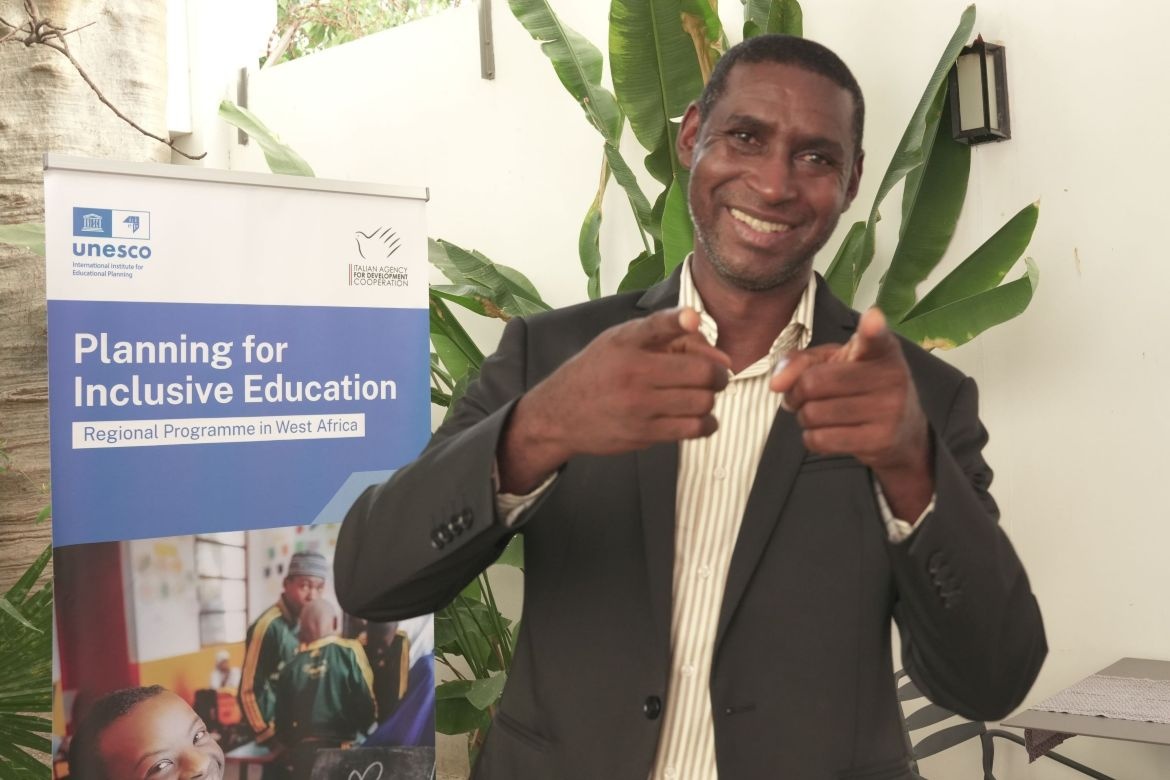
For Mr. Yatma Fall, President of the West African Federation of Persons with Disabilities (FOAPH) and member of the program’s steering committee, the value of the initiative is clear:
“This program is specifically designed to positively influence public policies through inclusive education planning, making it a highly valuable initiative for people with disabilities.”

Yatma Fall
President of the West African Federation of Persons with Disabilities (FOAPH)

Planning for inclusive education, he explains, means encouraging authorities—particularly those responsible for education—to include disability as part of their planning and policies.

Capacity building: How to bring about change in education policy

Building truly inclusive education systems requires education professionals and civil society organizations, including organizations of people with disabilities, to be equipped with the necessary tools, knowledge and theoretical frameworks. This is the goal of the regional program’s capacity building component.

This approach is centered around a training course “Fundamentals of Education Sector Planning for the Inclusion of Persons with Disabilities,” developed by UNESCO-IIEP and UNICEF between 2018 and 2019 that has since been scaled up and is available in 3 languages: English, French and Portuguese.

Over 4 months and approximately 100 hours of work, participants alternate between theoretical inputs, case studies and practical exercises, working together in national teams to learn how to include children with disabilities in educational planning.

The program’s first cohort, launched in October 2025, brings together around 50 participants, several of whom belong to organizations of people with disabilities.

Two new cohorts are planned for 2026 with a view to gradually expanding the critical mass of trained stakeholders in the region.

According to Zeinabou Gaye, a training participant from Senegal, the practical exercises helped her realize that:

"Inclusion is not just about having a student with a disability in a regular classroom. It requires a comprehensive transformation of the education system: teacher training, adapting infrastructure, gender responsiveness and raising awareness within the community.”

Zeinabou Gaye
Senegal

For Marie Bah, a Gambian participant, an interview with a visually impaired teacher conducted as part of a group activity for the program’s first cohort provided an opportunity to gain a deeper understanding of how inclusive education policies are implemented on the ground.

It also reinforced the idea that teachers’ attitudes, community engagement and the availability of resources are instrumental in shaping the learning experiences of students with disabilities.

“Inclusion is an evolving process that requires continuous advocacy, collaboration and reflection to ensure that every learner, regardless of ability, has the opportunity to reach their full potential.”

Marie Bah
The Gambia
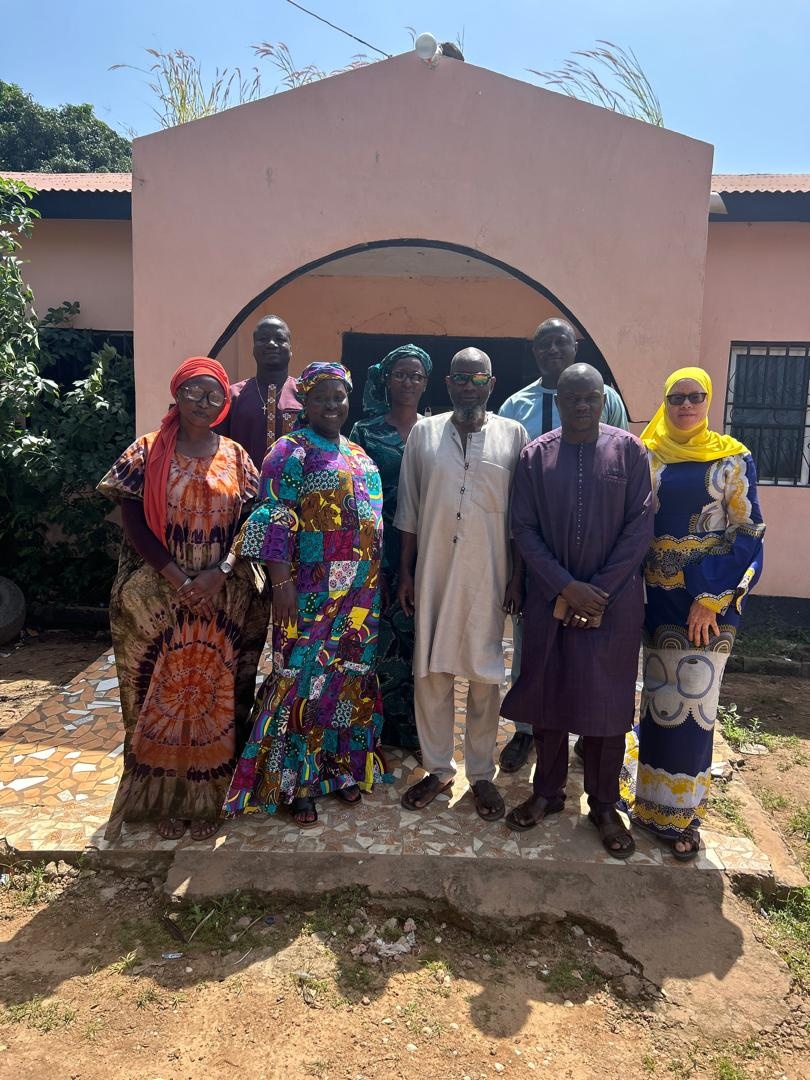
Group photo of the first Gambian training cohort: Interview with Mr. Lamin GAYRA, visually impaired teacher and Treasurer of The Gambia Organization of the visually impaired (GOVI), October 2025. Credit: GOVI

Group photo of the first Gambian training cohort: Interview with Mr. Lamin GAYRA, visually impaired teacher and Treasurer of The Gambia Organization of the visually impaired (GOVI), October 2025.

Credit:
GOVI

A community of practice to strengthen strategy and exchange

To further develop learning around inclusive education, the program plans to establish a community of practice through a digital platform that will facilitate knowledge sharing and the co-creation of practical tools for inclusive education planning, tailored to national contexts.

Following an analysis of inclusive education stakeholders in the 8 West African countries supported by the “Planning for Inclusive Education” Program as well as in other African countries and regions worldwide to foster South-South cooperation, UNESCO-IIEP in Africa will extend invitations to join the community of practice in early 2026.

For Ali Djau, Chair of the Steering Committee and Program Focal Point for Guinea Bissau, this community of practice will provide a space for participants to compare and share their experiences and draw inspiration from solutions developed elsewhere.

He also highlights its practical benefits.

Ali Djau

“Often, we talk about inclusive education, but here, we have the opportunity to learn how to put it into practice.”

Ali Djau
Program Focal Point for Guinea Bissau, and Chair of the Steering Committee
Program Focal Point for Guinea Bissau, and Chair of the Steering Committee. Credit: IIEP-UNESCO/NIANGA

Program Focal Point for Guinea Bissau, and Chair of the Steering Committee.

Credit:
IIEP-UNESCO/NIANGA

By ensuring capacity building and relying on an active community of practice to place inclusion at the heart of education sector planning, the 8 West African countries, supported by UNESCO-IIEP, are laying the groundwork for a more equitable and inclusive education sector for children with disabilities.

Transforming inclusive education through coherent planning and partnerships

Maria Helena Fernandes Andrade, the Program Focal Point for Cabo Verde and Vice Chair of the Steering Committee, emphasizes the importance of rethinking education systems so that they better meet the needs of students with disabilities, drawing on existing best practices and embracing innovation.

“We need to think about a system that can provide more effective responses to the needs of students with special education needs,” she explains, adding that “we must learn and innovate every day so that these children have the same opportunities for success as others.”

Maria Helena Fernandes Andrade
Program Focal Point for Cabo Verde and Vice Chair of the Steering Committee

To make this vision a reality for children and young people with disabilities, strengthening capacity of education systems is key—particularly through knowledge sharing within communities of practice.

Robust education policies that support children with disabilities also need to be developed—a process that requires analyzing existing policies, resources, data and practices through the lens of inclusion.

The Education Sector Analysis Methodological Guidelines includes a section on disability inclusion, provides a coherent framework for guiding sector analysis and strategic planning from an inclusive perspective.

UNESCO-IIEP in Africa supports countries throughout these processes to help transition their education systems toward a more inclusive approach.

The success of this process also depends on all stakeholders’ commitment to working in partnership, which is why it is crucial to align all investments with capacity building priorities and the transformation of education systems.

Related blogs

Leave a comment

Your email address will not be published. All fields are required.

The content of this field is kept private and will not be shown publicly.

Comments

  • No HTML tags allowed.
  • Lines and paragraphs break automatically.
  • Web page addresses and email addresses turn into links automatically.