
Adaptation planning is at the heart of a country’s response to climate change, forging a path to resilient development to help deal with the setbacks of frequent climate-related hazards.
Key sectors such as infrastructure, water and health are often prioritized in adaptation planning, recognizing their key role in climate resilience. Education is also central to a thriving society and is impacted by climate shocks, but has been almost entirely overlooked when it comes to climate adaptation planning.
But that’s changing. The NAP Global Network and Save the Children’s latest research ‘Education in National Adaptation Plan Processes’ explores how countries are starting to prioritize the education sector in their national adaptation plan (NAP) process.
By integrating adaptation into national planning and budgeting systems, the NAP process enables governments to:
- assess risk
- prioritize and implement targeted actions
- track, measure and learn from progress
- coordinate climate finance access.
Integrating education within this process is an invaluable opportunity to coordinate, implement and finance climate adaptation across the education sector.
What do national adaptation plans say about education?
Here are our findings:
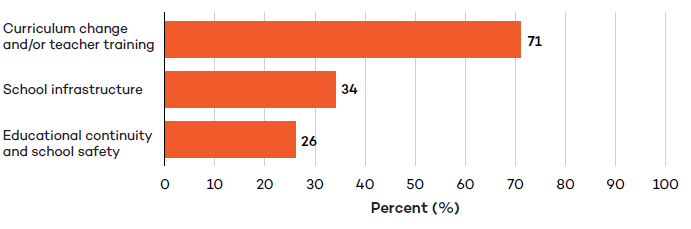
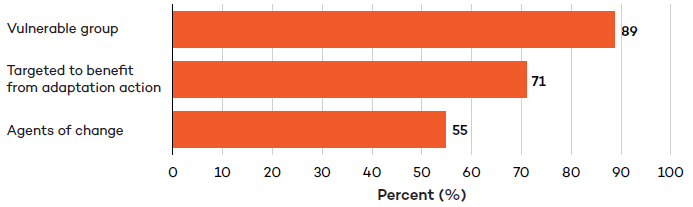
- 84% of national adaptation plans include an education priority or action, whereas only 40% consider education in climate risk assessments.
This shows a growing focus on education in national adaptation planning, but there is still an evidence gap when it comes to understanding the impact of climate change on the sector.
Leave a comment
Your email address will not be published. All fields are required.